
Bend voters approved a $190 million GO Bond in 2020 to fund approximately 30 transportation projects by the end of the decade. As we race through this ambitious construction schedule—with major closures on Olney Avenue, Bear Creek Road, and other key corridors—it’s worth asking: Are we spending wisely?
The bond includes important improvements to east-west connections, traffic congestion relief, and bicycle and pedestrian routes. But as we watch major corridors close for years at a time—the Reed Market railroad overpass project could begin as soon as 2027 and requires a $32 million federal grant application—should we ask whether every major capital project needs to consume such a large share of our limited transportation dollars?
A Cautionary Tale from ODOT
Oregon’s experience offers a stark warning about the megaproject trap. According to City Observatory, a watchdog website produced by Portland economist Joe Cortright, ODOT’s I-5 Rose Quarter project ballooned from $450 million in 2017 to over $2 billion today—a 400% increase for just 1.5 miles of freeway. The Abernethy Bridge jumped from $248 million to over $800 million. The Interstate Bridge replacement escalated from $4.8 billion to potentially $7.5 billion.
Cortright, who diligently tracks ODOT’s spending patterns, notes: “There are no consequences that anybody experiences for going over budget. No one at ODOT has been removed or even chastised.” The result? ODOT is laying off hundreds of employees while insisting it must move forward with billion-dollar-per-mile projects.
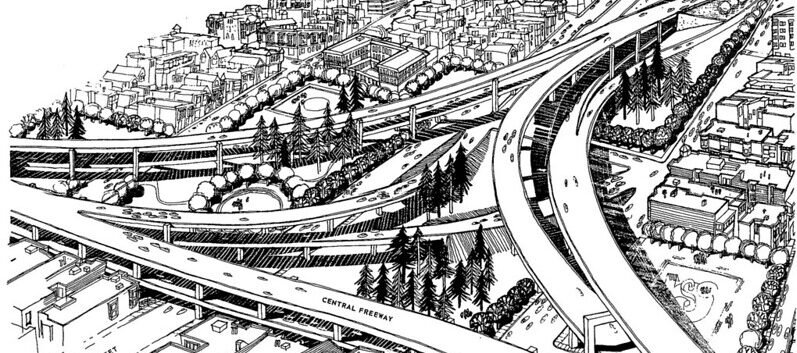
The Staggering Cost Gap
The math is illuminating. Adding a vehicle lane to a major urban road costs approximately $64 million per mile. Compare that to bike infrastructure: a standard bike lane averages $133,000 per mile, protected bike lanes run $500,000 to $1 million per mile, and basic striping costs just $20,000 per mile.
Here is one jarring example: Portland’s entire 300-mile bicycle network would cost $60 million to replace—the same as building one mile of four-lane urban freeway. For the cost of one mile of highway, a city could build 300 miles of bike infrastructure, according to a Portland State University cost analysis study.
The Case for Balance
While the majority of the GO Bond funds vehicle infrastructure, it also includes smart investments in the Bend Bikeway and 12 Key Routes for Biking and Walking. Additionally, the city has strategically leveraged the GO Bond and smaller city and state funding sources to acquire federal grants that will cover nearly 80% of the Hawthorne Overcrossing, currently in design for 2027-28 construction. These are the right priorities, and Bend Bikes supports these projects.
But bike infrastructure offers remarkable value that shouldn’t be overlooked. Studies show protected bike lanes reduce cyclist injuries by up to 90%. Small-scale safety improvements—speed humps, bike boxes, traffic circles, and other relatively inexpensive solutions—can address multiple dangerous intersections for the cost of a single major reconstruction project.
We are not arguing against large infrastructure. Bend needs safe railroad crossings and adequate east-west connections. The Franklin Avenue underpass and Reed Market overpass address legitimate safety and connectivity issues.
But ODOT’s experience demonstrates what happens when megaprojects consume entire budgets: maintenance gets deferred, smaller projects get postponed, and cost overruns trigger financial crises. The agency spent an estimated $500 million on consultants alone for three projects—money that could have funded thousands of miles of bike lanes or addressed countless neighborhood safety concerns.
A Different Path Forward
As Bend moves through its GO Bond timeline, we have an opportunity to demonstrate balance—one that funds necessary large projects while making strategic investments in affordable, high-impact improvements that make our streets safer and more accessible for everyone.
How much funding should go to large-scale infrastructure versus smaller, more cost-effective improvements? Each large project locks in decades of property tax obligations and opportunity costs. When and how should we build infrastructure for all transportation modes? Can we cost-effectively integrate these safety elements into new street designs and existing retrofits or will we find ourselves spending millions more to completely rebuild our streets in ten years from now?
The question isn’t whether we should build infrastructure. It’s whether every project needs to be a megaproject, or whether we might achieve more—for more people—by planning ahead, thinking smaller and building smarter.
– by Al Olson